
Visiting Salvation Mountain
Visiting Salvation Mountain and exploring Slab City is well worth your time if you find yourself in the Southern California desert. This off-the-beaten-path place is filled with eccentric people, colorful art, and might just be what you need to crack a smile in the heat!
Just a Heads up, friends!
Some of the links on this site are affiliate links. That means if you click through and make a purchase, I may earn a small commission at no extra cost to you. It’s like tossing a few coins in my tip jar to help fund my next cup of road trip coffee.
I only recommend products, places, and gear I genuinely love and would take with me on adventures. So, thank you for supporting Tiffany Denae – one caffeinated click at a time!
History of Salvation Mountain
It’s always great when we can discuss individuals who have a vision and do everything in their power to bring it to life. Leonard Knight was one of those people.
His original plan was to build a hot air balloon, but after fourteen years, it still wasn’t working. So, he decided to stay in Ninland for a couple of days and build before he left to return east. A couple of days turned into a beautiful piece of work that people still visit to this day.
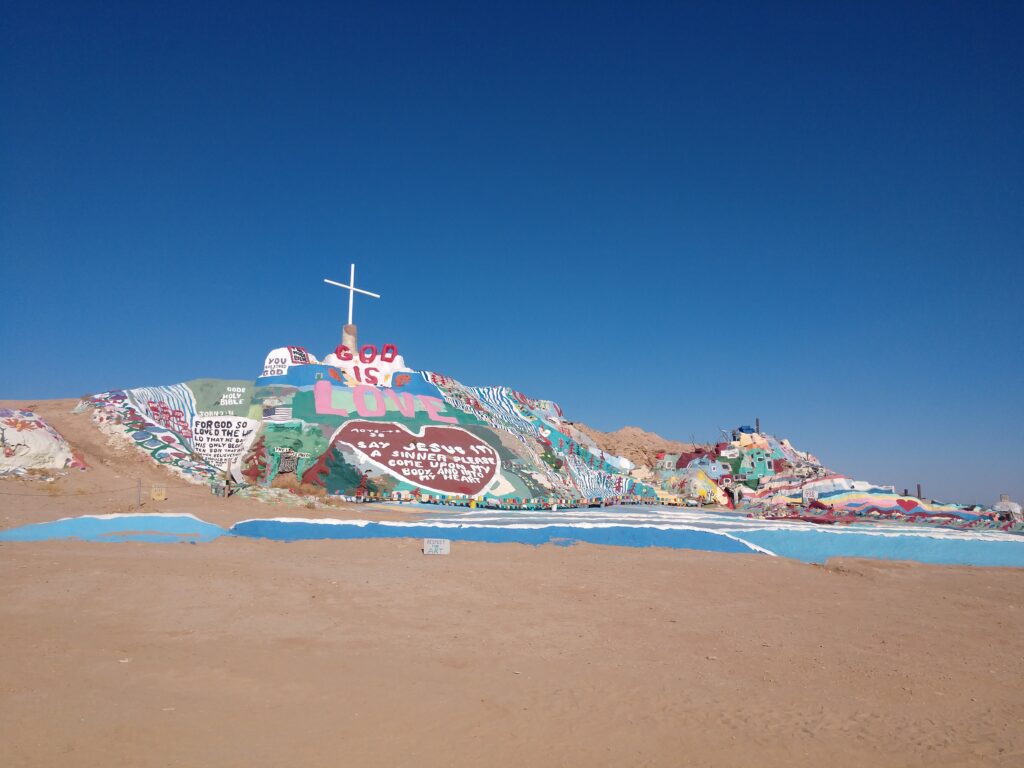
When visiting Salvation Mountain, you will see that it is made from adobe clay, straw, and thousands of brightly colored donated paints. His whole goal was to show that being a Christian is as simple as repenting of one’s sins by asking God for forgiveness and then accepting Him into one’s heart.
And it caught people’s attention and their hearts. In 2002, the Folk Art Society of America designated Salvation Mountain a national treasure, and the state of California has recognized it for its cultural significance.
Since his passing in 2014, local volunteers and supporters have continued to maintain the site to preserve its vibrant colors against the hot desert sun.
History of Slab City
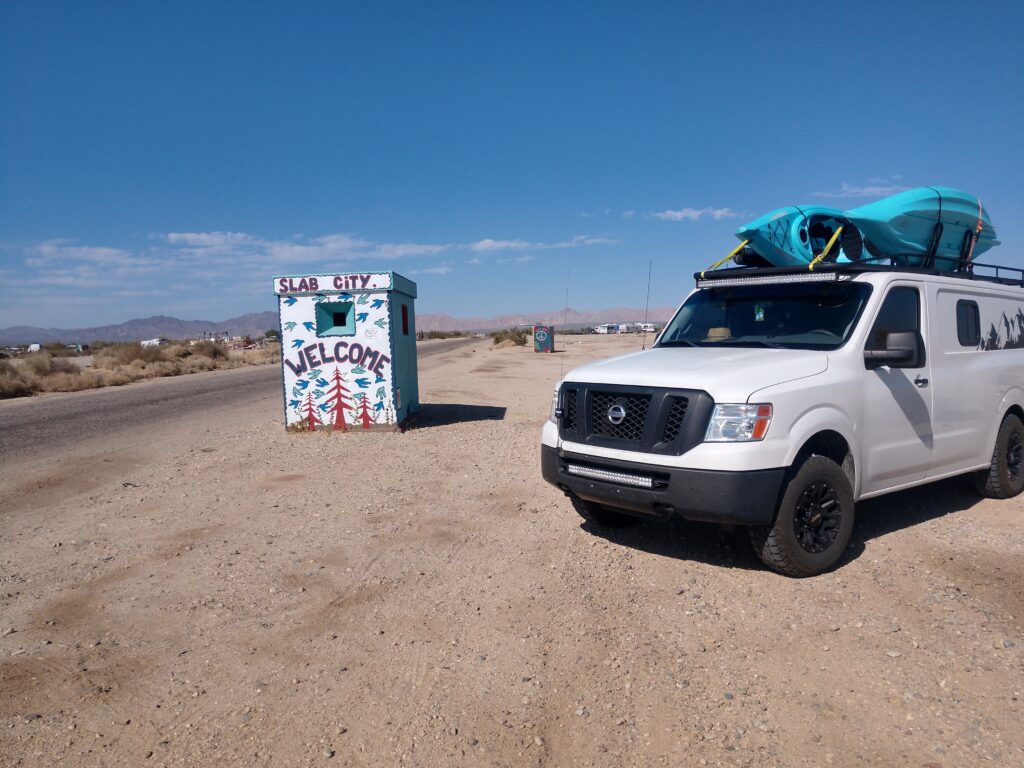
Slab City was originally Camp Dunlap, a World War II Marine Corps training base that the federal government gave to the state of California in 1956. Before the gift, though, they dismantled all of the buildings, only leaving the concrete “slabs”, giving the place its name.
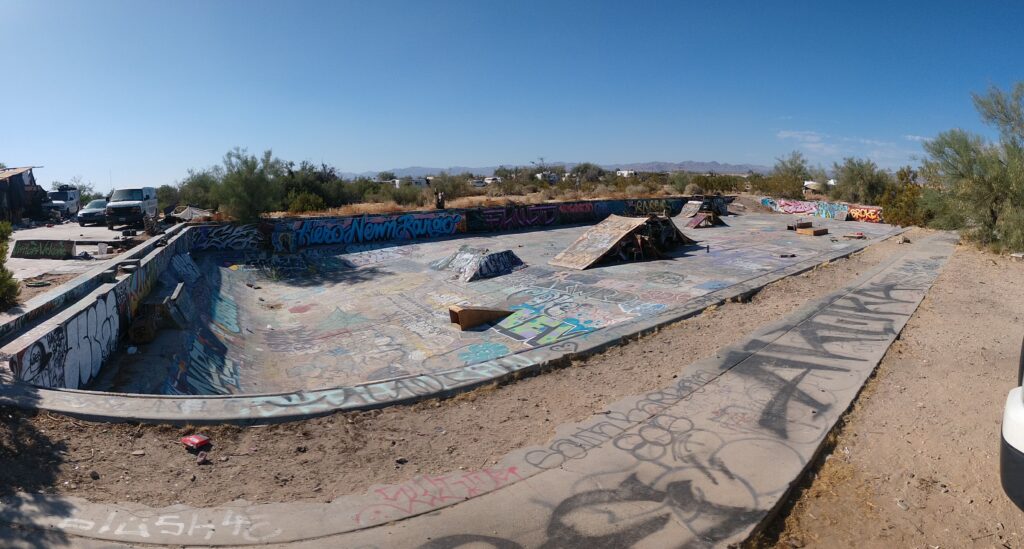
Due to its desert atmosphere, the state didn’t want it either, so over the years, squatters, artists (such as Leonard Knight), snowbirds, and individuals seeking to live off the grid have made it their community. Since they can live free of rent, utilities, and many laws, it has earned the nickname of The Last Free Place in America.
Much like visiting Salvation Mountain, located at the entrance of Slab City, you will notice that the place has an eccentric, creative vibe. There’s an outdoor music venue, a library, and numerous art installations scattered around. I’ve heard there is even a coffee shop!
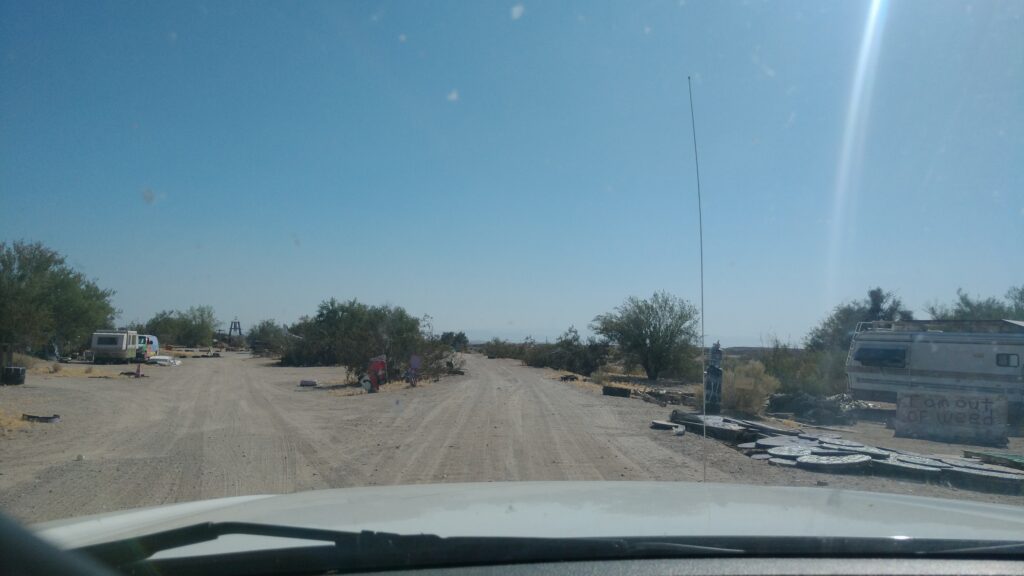
We visited in the summer, when it was a peel-your-skin-off kind of hot, and there were still people around to wave at us as we drove through the area; however, we didn’t get out and visit due to the heat. During the winter, though, the community multiplies from 150 residents to over 1,000.
Best Time for Visiting Salvation Mountain and Slab City
| Month | Temperature |
| January | 71° / 41° |
| February | 74° / 44° |
| March | 79° / 48° |
| April | 86° / 53° |
| May | 94° / 60° |
| June | 103° / 67° |
| July | 107° / 75° |
| August | 106° / 76° |
| September | 102° / 70° |
| October | 92° / 59° |
| November | 79° / 47° |
| December | 70° / 40° |
The best time to visit Salvation Mountain is from November to March, as daytime temperatures are mild, allowing you to explore without melting in the sun. In addition, there is a larger number of people, thanks to the “snowbirds”, meaning the crowd is a bit more lively and interesting. Additionally, the colors of the mountain are beautiful, especially with the winter sun at sunrise and in the late afternoon.
How to Get to Salvation Mountain and Slab City
From Palm Springs (about 84 mi / 1½ hr):
- Head south on CA‑86S from Indio.
- Continue 11 mi to 66th Ave (Hwy 195) – you’ll spot a big gas station/truck stop.
- Turn east onto 195 for around ½ mile to reach Hwy 111.
- Turn south on Hwy 111, drive ~42 mi to Niland.
- In Niland, turn left (east) onto Main Street/Beal Road and go ~3 mi—after the train tracks, it’ll appear on your right.
From San Diego (~150 mi / 2½ hr):
- Take I‑8 east toward Yuma, exit at Hwy 111 north, pass Niland, then east on Beal Road.
From Los Angeles (≈188 mi / 3 hr):
- Take I‑10 east to CA‑86S just east of Indio.
- Follow the same route as from Palm Springs.
Location & Coordinates
- Address: 603 Beal Road, Niland, CA 92257 (Imperial County)
- GPS: ~33.254° N, –115.473° W
Places to Stay When Visiting Salvation Mountain and Slab City
I’m going to be completely honest here. There is a hostel in Slab City. There are motels in Ninland. But I’m a big sissy and don’t want to stay somewhere that makes me feel uncomfortable, especially since many times I’m traveling solo or with other females.
All that said, I’m going to give you three recommendations based on location.
- RV/Camper: The Fountain of Youth Spa RV Resort is in Ninland. It has pretty high ratings and there are multiple options on what you can stay in. This is the closest to visiting Salvation Mountain, as Ninland is the nearest city at only fifteen miles away.
- Hampton Inn & Suites Indio: I’ll say it over and over again – Hilton hotels have never let me down. This hotel looks cozy and funky, with amenities including breakfast, a pool, and a hot tub, and the price is excellent (as of this writing, it’s $100 per night). This hotel is about an hour from Salvation Mountain.
- Modern 70s Home: I’ve stayed here, so I can attest to how lovely the place is. We loved being able to turn the lights off at night and see the stars while soaking in the hot tub! Staying here, it will take you about two hours to get to Salvation Mountain, though you can opt to go through Joshua Tree National Park first to save distance and check out all my (current) favorite national park has to offer!
Safety and Rules for Visiting Salvation Mountain and Slab City
Safety tips
- Bring plenty of water. The desert is no joke — dehydration can sneak up on you, especially if you’re wandering around taking photos.
- Pack snacks and food. There are no restaurants or reliable stores at Slab City itself. You’ll want to stock up before you arrive.
- Fuel up. The nearest gas stations are in Niland (about 3 miles away), but services are very limited, so it’s wise to fill up before exploring.
- Check your cell service. Coverage can be spotty at best — let someone know your plans before heading out.
- Watch the weather. When we went (in mid-July), it was a little under 120°F. I felt like my skin was going to peel off from the heat. Needless to say, we didn’t stay out there long.
- Lock up valuables. Petty theft does happen in the area. Keep your car locked, and don’t leave valuables out.
- Respect the community. Slab City is home to people who live off-grid by choice. Be courteous, don’t photograph residents without permission, and remember it’s not a tourist attraction in the traditional sense — it’s their home.
- Drive cautiously. Roads around Slab City are rough, sandy, and sometimes have a washboard texture. Go slow, and keep an eye out for pedestrians, pets, and bicycles.
- Wear closed-toed shoes. There’s lots of broken glass, rusty nails, and desert debris.
- Rules for Fido. If you’re bringing a dog, keep them leashed, and bring plenty of water for them too.
- Pack out all your trash. There’s no waste collection in Slab City.
Rules and etiquette
- Stay on the yellow brick road (the painted path) to protect fragile parts of the art.
- Don’t climb on steep or roped-off areas — the adobe is soft and easily damaged.
- Respect volunteers and any posted rules — they work hard to keep the site open and beautiful.
- Donations are welcome and help with painting and upkeep.
- Act responsibly and use good judgment. Slab City is essentially lawless, meaning no official policing.
- Respect personal property, even if it looks abandoned.
- Be fire-safe when camping and avoid starting unnecessary blazes.
- Stay aware of your surroundings, especially at night — the area can get rowdy.
- Be kind and courteous — Slabbers appreciate visitors who treat them with dignity.
Other Things To Do in the Area
Salton Sea
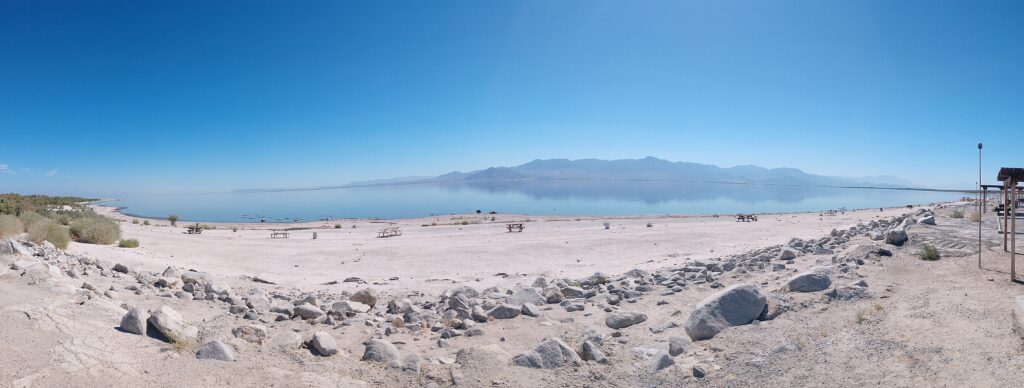
California’s largest inland lake was formed in 1905 when heavy flooding breached an irrigation canal, diverting water from the Colorado River. Initially, it attracted tourists, fishermen, and resort developers. However, with no natural outflow and an influx of agricultural runoff, the lake grew saltier and more polluted.
Today, this location draws only photographers, birdwatchers, and road trippers excited to see the abandoned resorts. We stopped on our way from Joshua Tree to Salvation Mountain, and, um, it does smell – heads up!
Sonny Bono Salton Sea National Wildlife Refuge
Just south of the Salton Sea, this refuge is a great spot for taking a walk to see migrating birds, such as pelicans and herons, especially during the winter months.
Imperial Sand Dunes
About an hour south, these towering dunes are a mecca for off-road vehicles, photography, and dune-sledding. And if you’re a Star Wars fan, it might look familiar!
Frequently Asked Questions
What is Salvation Mountain made of?
It is made from adobe clay, straw, and thousands of brightly colored donated paints
What is the community like in Slab City?
We didn’t stop and talk to anyone other than other tourists at Salvation Mountain, but we did drive through, and everyone who was out seemed super friendly. My favorite part was the lady who waved at us from right outside her camper!
Are there environmental concerns regarding Salvation Mountain?
Although Salvation Mountain is built from adobe clay and donated paint, there have been concerns over whether the materials could leach chemicals into the desert environment, especially after rare heavy rains. However, supporters and volunteers work hard to maintain and stabilize the structure with non-toxic materials whenever possible, helping preserve both Leonard Knight’s vision and the fragile desert ecosystem surrounding it.
How can Salvation Mountain be supported?
Salvation Mountain is supported entirely through donations and volunteer efforts. Visitors can contribute cash on-site (there’s usually a donation box), or donate online through the official Salvation Mountain, Inc. nonprofit, which funds paint, repairs, and ongoing preservation work. Even just spreading the word, respecting the artwork by staying on the yellow brick road, and sharing its story helps keep Leonard Knight’s message of love alive for future travelers.
Our Final Thoughts on Visiting Salvation Mountain
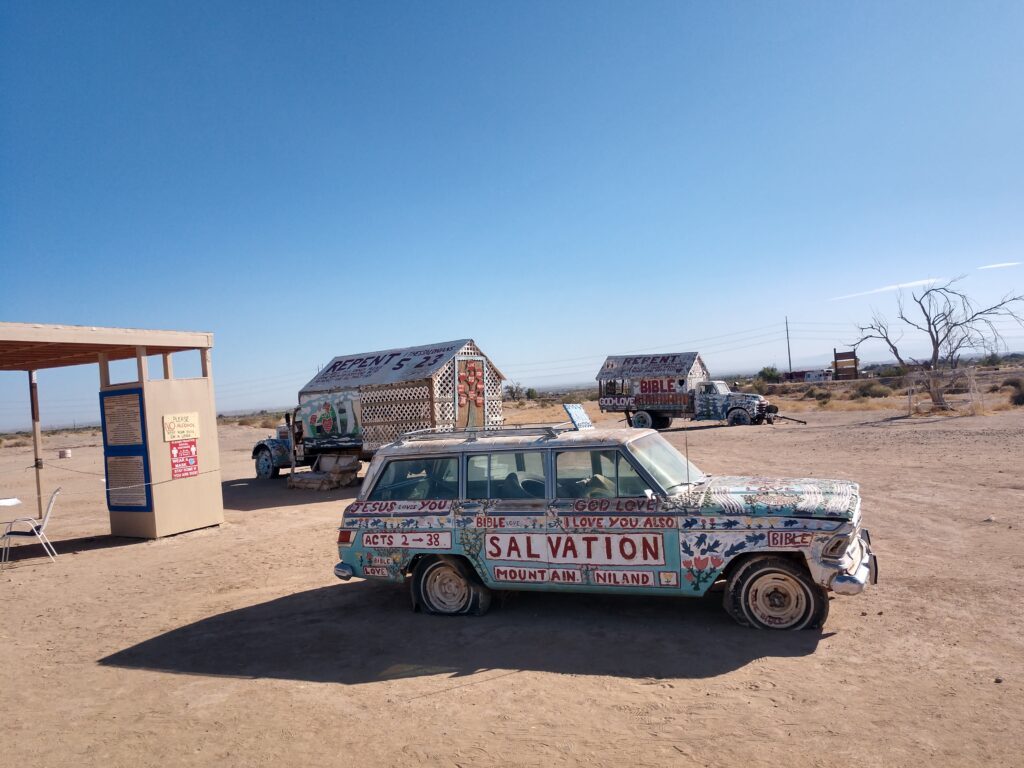
Salvation Mountain was something I saw on television when I was in Junior High, and I never forgot it. I’m so glad we got to go in the summer of 2020, and I’m already looking forward to going back!
