
Grand Canyon North Rim
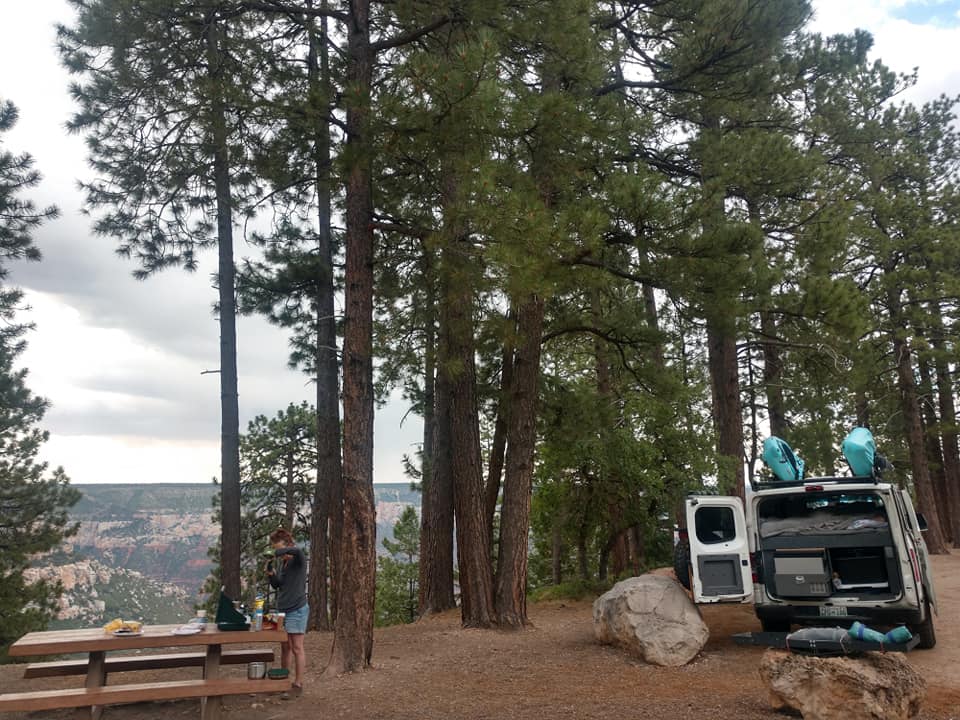
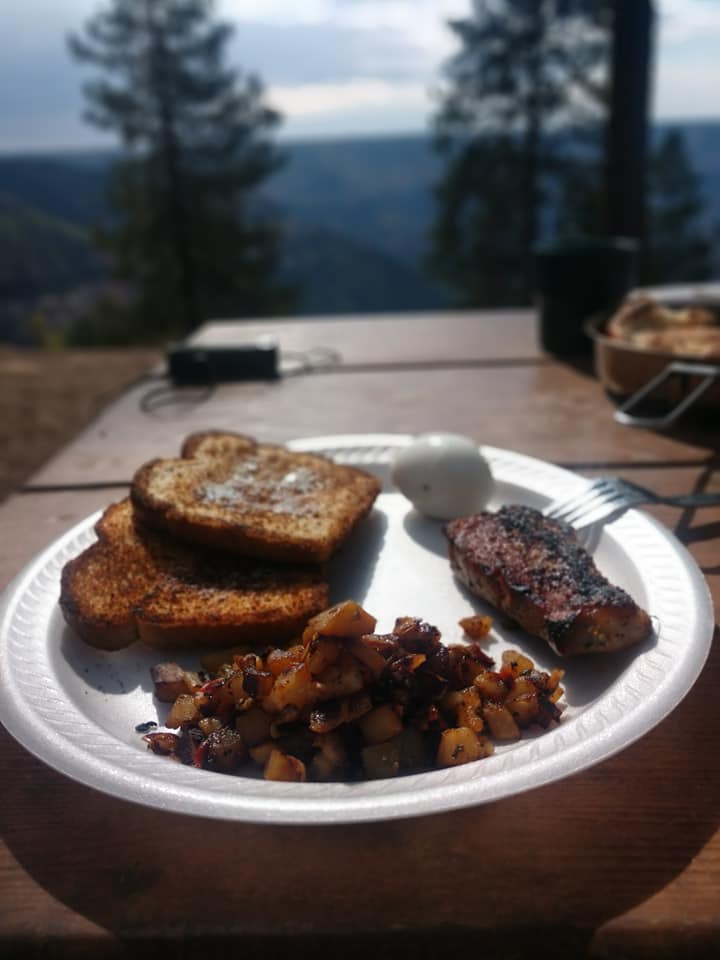
In 2020, while the rest of the world was hunkered down, my family and I took our Nissan NV1500 and spent a month traveling the US. One of our later stops on the trip was the Grand Canyon North Rim. It was a day of not setting it on fire (though our breakfast might have said otherwise), exploring, and enjoying God’s handiwork.
In 2025, the Dragon Bravo fire destroyed much of what we explored that day; however, the area is opening back up for day use, and the more people enjoy it now, the more they can build a brighter future for the area.
Just a Heads up, friends!
Some of the links on this site are affiliate links. That means if you click through and make a purchase, I may earn a small commission at no extra cost to you. It’s like tossing a few coins in my tip jar to help fund my next cup of road trip coffee.
I only recommend products, places, and gear I genuinely love and would take with me on adventures. So, thank you for supporting Tiffany Denae – one caffeinated click at a time!
History of the Grand Canyon North Rim
Originally home to the Ancestral Puebloans, the Grand Canyon North Rim has remnants of their dwellings, tools, and stories that shape how we understand the land today. As with the rest of the US though, European American explorers and settlers began mapping the canyons in the 1800s. John Wesley Powell led many of the expeditions through the Colorado River and brought national attention to the canyon’s scale and beauty.
The South Rim was actually easier to access in the beginning, thanks to the railroad expansion in the early 1900s, which led the north rim to be a bit more remote, even today. The entire Grand Canyon was deemed a National Park in 1919, but the North Rim moved more slowly than the rest, which was somewhat intentional.
The most iconic landmark in the area is the Grand Canyon Lodge, which was built in the 1920s. It has been through two fires, one in 1932 and the Dragon Bravo Fire in 2025. Currently, they are working on rebuilding it plus the visitor center, gas station, and many of the historic cabins. Therefore, staying the night inside the Grand Canyon North Rim is not an option this summer. To follow along for current information, be sure to check out their official site.
When to Visit the Grand Canyon North Rim
| Month | Temperature (*F) |
| January | 38° / 17° |
| February | 39° / 18° |
| March | 45° / 22° |
| April | 53° / 27° |
| May | 63° / 34° |
| June | 75° / 42° |
| July | 78° / 49° |
| August | 75° / 47° |
| September | 69° / 41° |
| October | 57° / 32° |
| November | 46° / 23° |
| December | 38° / 17° |
Spring (May-June): They typically open mid-May and you can expect to see cooler temperatures, think patches of lingering snow along with fresh greenery. The crowds are lighter, which means you have a chance to experience the North Rim with some solitude
Summer (July- August): This is the time of year that the park has more lively, social summer energy. While the days are warm, they are still ten to fifteen degrees cooler than the South Rim. Speaking of weather, the warmth brings deep green forests and dramatic skies.
Its also important to note that afternoon monsoon storms are common, with quick downpours and lightning, but the sunrises and sunsets cannot be beat!
Fall (October- November): This is the ideal time to go, if you ask me. The crowds are going to be smaller, as people are getting back into regular life and the weather is ideal for exploring with crisp mornings and mild afternoons. The services the national park offers will begin winding down as the season does and its important to note that early snow is always possible.
Winter (December-April): CLOSED
Getting to the Grand Canyon North Rim
Flying
There is no commercial airport located directly at the North Rim. Most visitors fly into a major hub and then rent a car for the remainder of the trip. St. George Regional Airport (SGU) is the closest commercial airport to the North Rim, located about 3 hours away. Flights are more limited and typically connect through Salt Lake City, Denver, or Phoenix.
Phoenix Sky Harbor International Airport is a significantly longer, 6 to 7-hour drive to the North Rim.
Driving
All routes eventually converge at Jacob Lake, AZ, where you must turn south onto Highway 67 to enter the park.
- From Las Vegas (approx. 4.5–5 hours):
- Take I-15 North past St. George, UT.
- Take Exit 16 toward Hurricane/Zion National Park onto Utah State Route 9 East.
- Turn south onto Utah State Route 59, which becomes Arizona State Route 389 at the state line.
- Continue to Fredonia, AZ, then turn south onto US-89A to Jacob Lake.
- Turn south onto Highway 67 directly to the North Rim.
- From Flagstaff (approx. 4 hours):
- Take US-89 North to Bitter Springs.
- Turn left onto US-89A West toward Jacob Lake.
- At Jacob Lake, turn south onto Highway 67.
- From Salt Lake City (approx. 6.5 hours):
- Take I-15 South to Cedar City, UT.
- Take Utah Highway 14 East to US-89 South toward Kanab.
- From Kanab, take US-89A South to Jacob Lake and follow Highway 67 south.
Important Travel Tips
- Seasonal Closure: State Route 67 and all North Rim facilities are closed from December 1 to May 14 due to heavy snow.
- Supplies: Fuel and services are very limited between Jacob Lake and the North Rim (44 miles); fill your tank at Jacob Lake.
- Navigation: Cell service is unreliable in this region; it is recommended to download offline maps or carry a paper backup.
Where to Stay in the Grand Canyon North Rim
Hotels near the Grand Canyon north rim
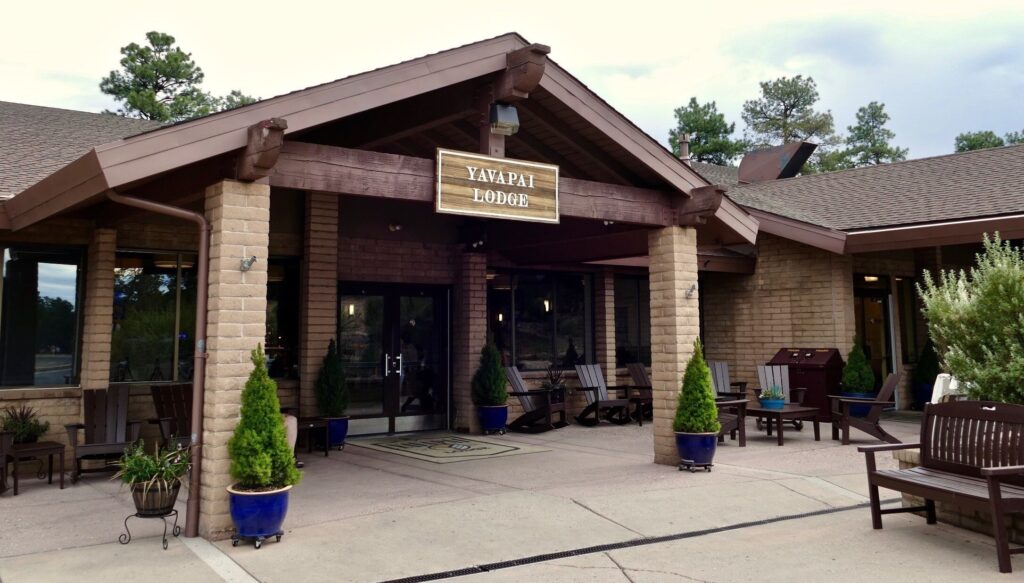
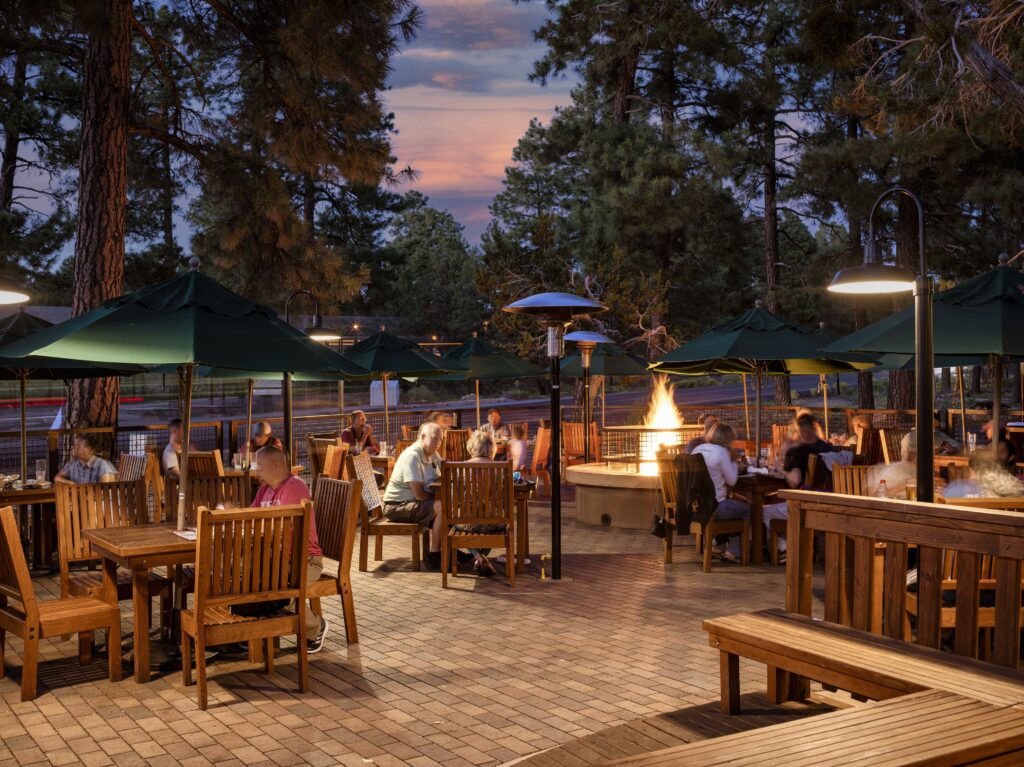
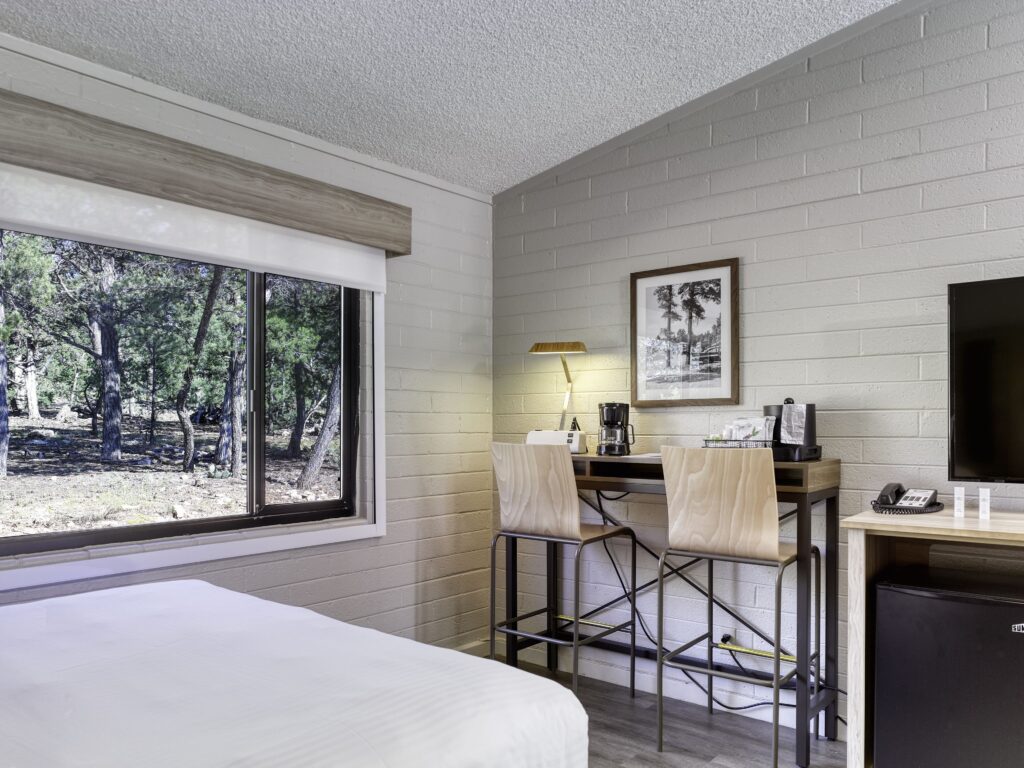
Yavapai Lodge
Located inside Grand Canyon National Park near Grand Canyon Village, Yavapai Lodge offers a quieter atmosphere than some of the busier historic lodges in the park. The location makes it easy to access shuttle routes, scenic viewpoints, and hiking trails without constantly moving your vehicle.
The rooms at Yavapai Lodge are simple, making them a great fit for travelers who plan to spend most of their time exploring the canyon. It also sits among the pine trees, giving the property a more secluded feel despite its central location within the park.
One of the biggest advantages of staying at Yavapai Lodge is convenience. Being able to wake up inside the national park allows you to experience sunrise and sunset without long drives. It also gives you time to enjoy the canyon before larger daytime crowds arrive.
Holiday Inn Resort The Squire at Grand Canyon
If you’re looking for a brand-name hotel that feels a little more like a full resort experience near the Grand Canyon, The Squire at Grand Canyon is one of the most popular options just outside the South Rim entrance in Tusayan, Arizona. The location makes it incredibly convenient for early-morning park visits while still giving travelers access to more modern amenities and dining options.
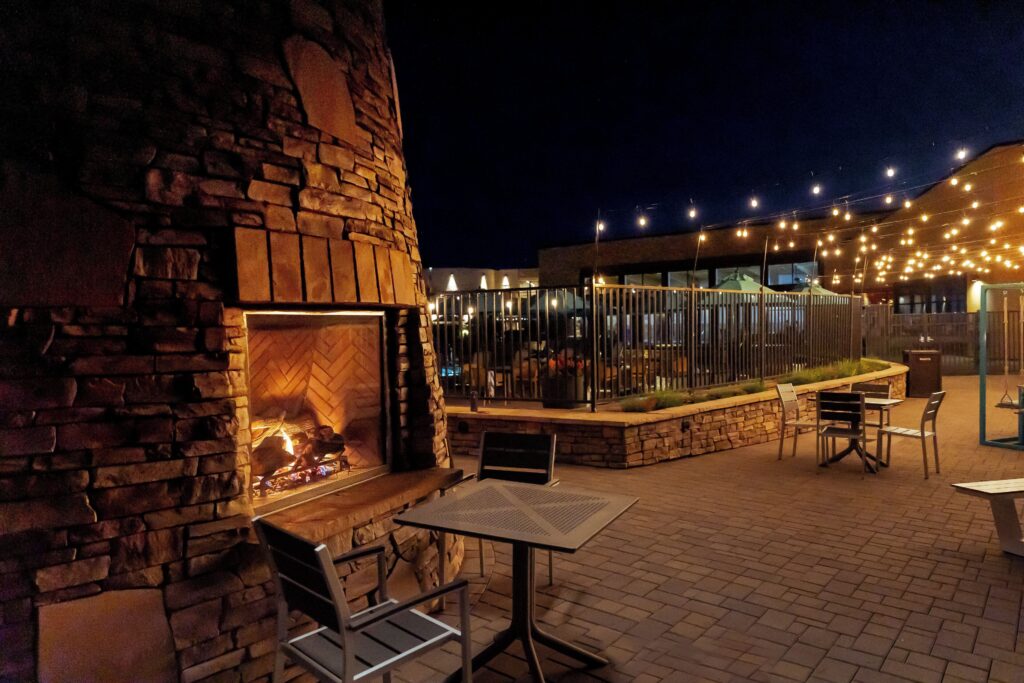
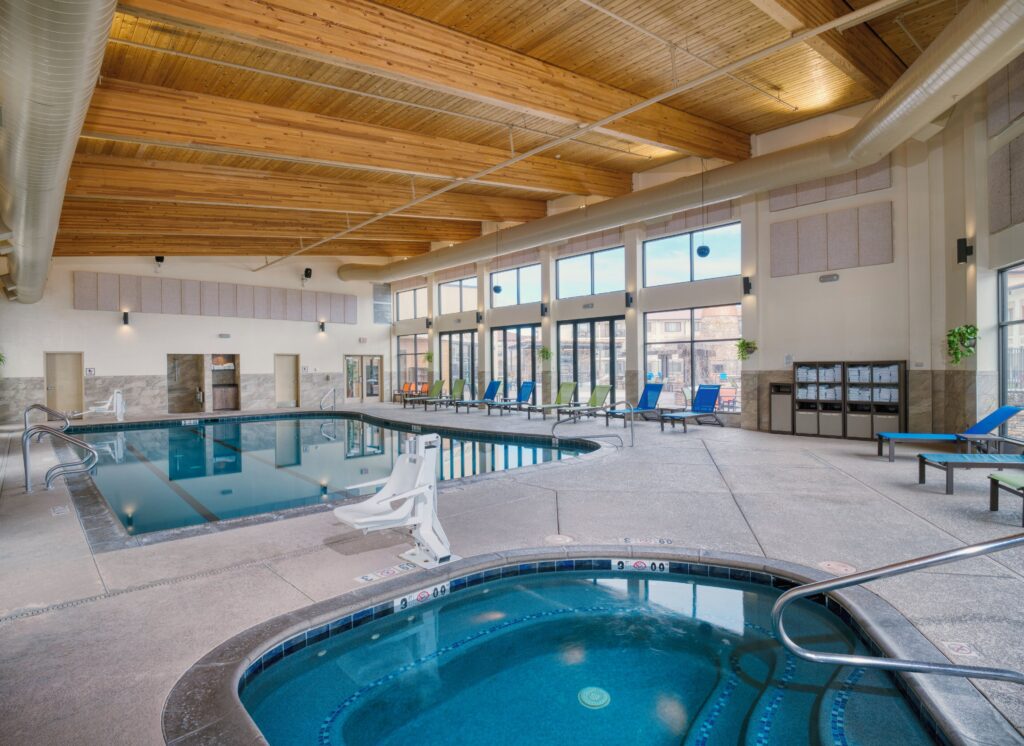
One of the biggest highlights of staying here is the atmosphere. The property features both indoor and outdoor pools along with hot tubs, making it a great place to relax after a long day.
The Squire also stands out because there’s plenty to do onsite beyond simply sleeping between park visits. Guests can enjoy multiple dining options, a game room, bowling alley, fire pits, and evening activities, which makes the hotel especially popular with families and people looking for a little more entertainment during their stay.
Bonus section: If you’re planning a longer stay, this hotel will be perfect for you. My family does this quite often when we visit a place we’ll be for a few days. We’ll plan two days around the activity, a day at the hotel to rest, and then two more days with activities- Disney World being our best example.
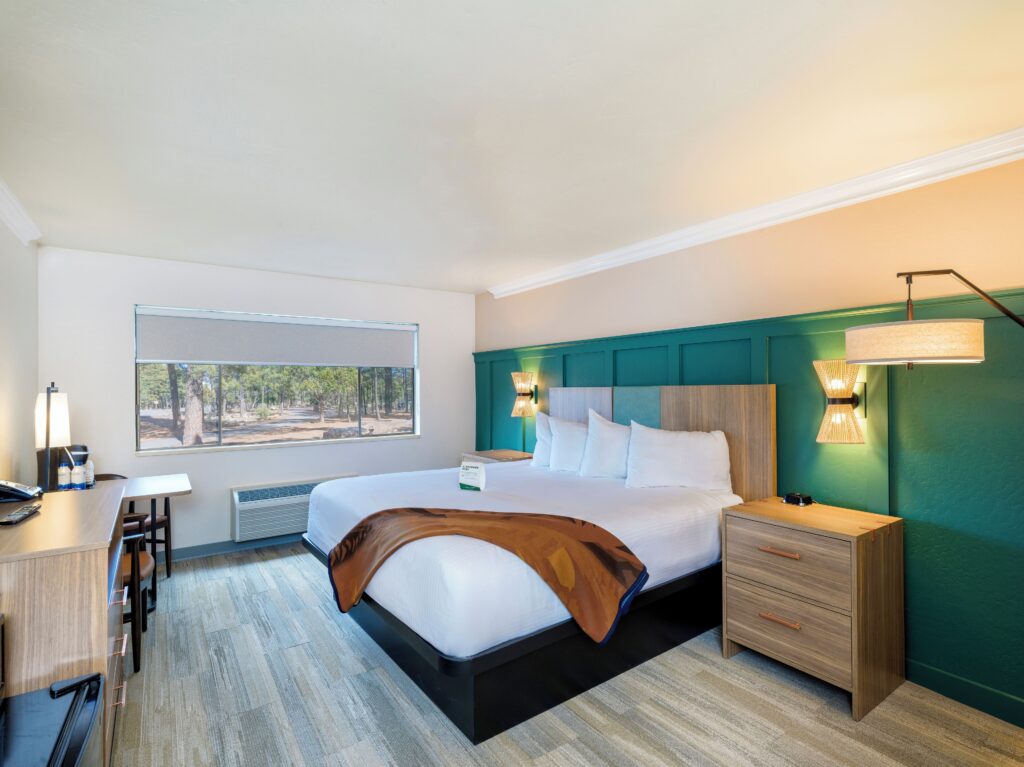
The rooms themselves are far more modern than most Holiday Inns I’ve seen, and many visitors have noted they appreciate amenities such as mini refrigerators, microwaves, and cozy seating areas.
Wander Camp Grand Canyon
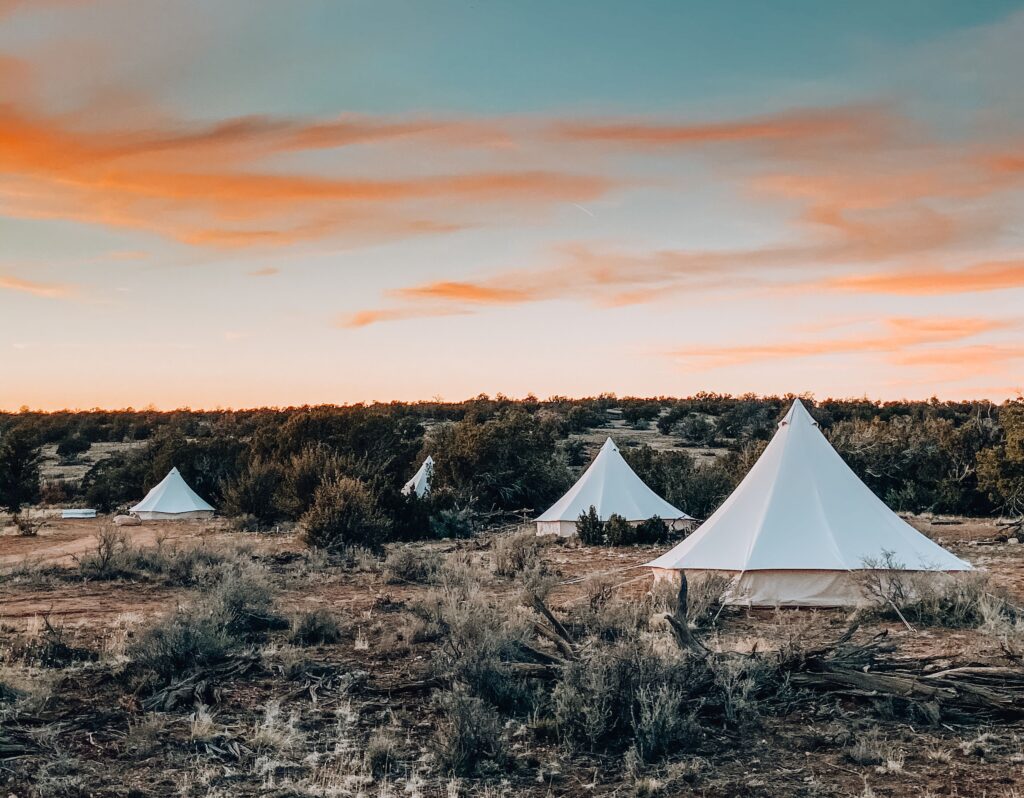
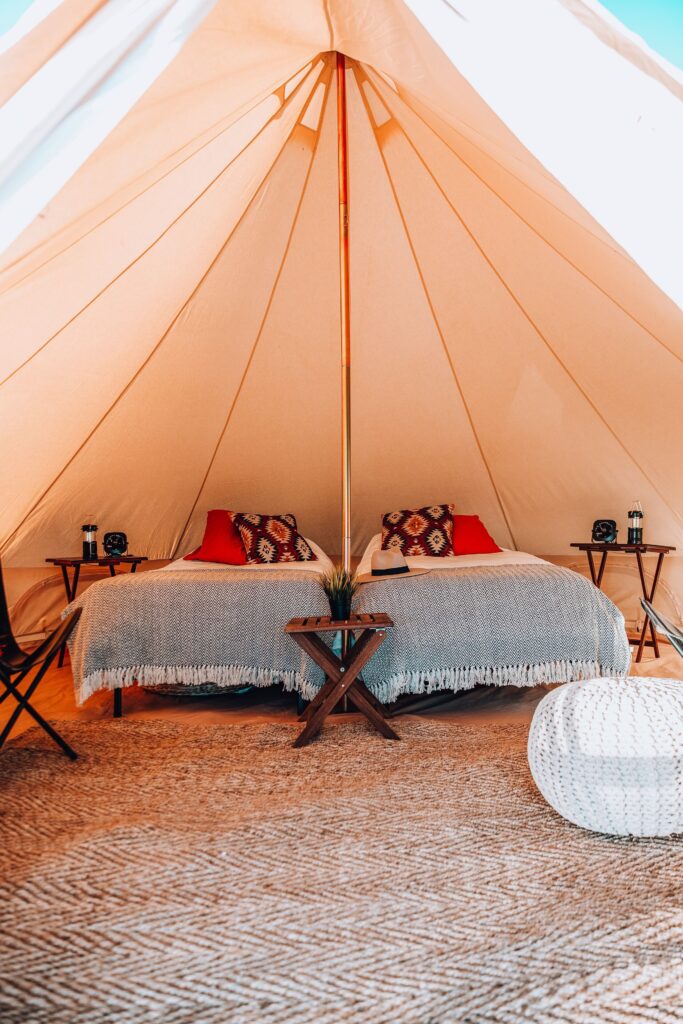
If you’re looking for something a little more adventurous and unique than a traditional hotel, Wander Camp Grand Canyon offers a completely different way to experience the area around Grand Canyon National Park. Located about 25–30 minutes from the South Rim entrance, this off-grid glamping experience combines the feel of camping with a few added comforts.
The accommodations are safari-style canvas tents designed to help guests feel immersed in nature while still having comfortable beds, linens, and furnishings. The atmosphere here is much more focused on the outdoor experience, making it a great fit for people who enjoy unplugging from daily life.
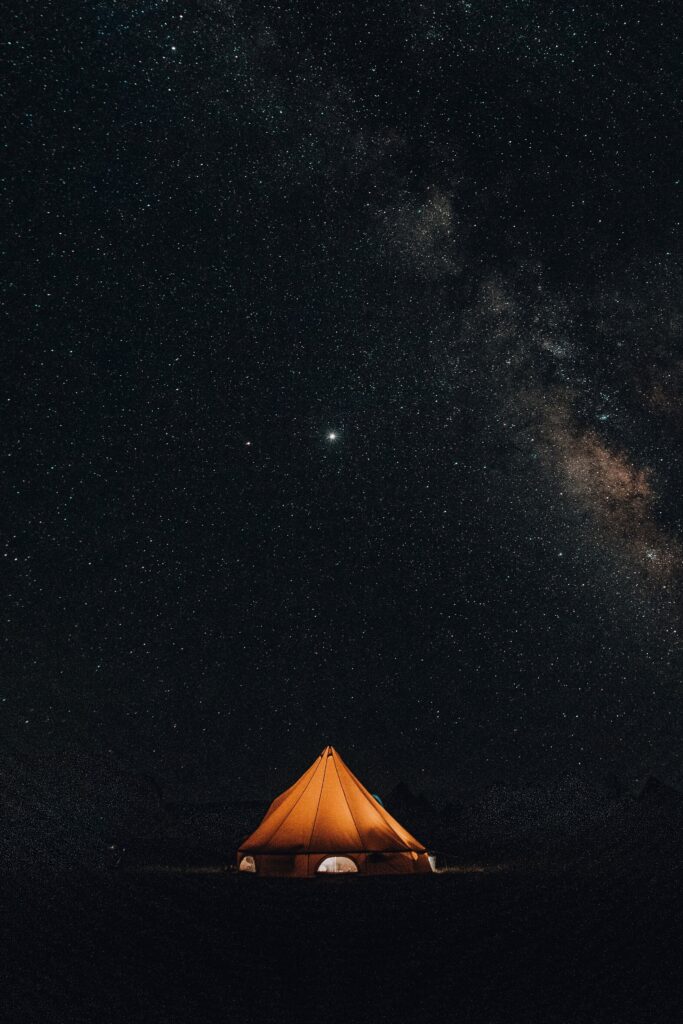
Wander Camp is located in Arizona’s dark sky country. On clear nights, the stargazing can be incredible, especially compared to what most travelers are used to seeing at home.
It’s important to know that this location leans more toward “comfortable camping” than luxury resort accommodations. Bathrooms are shared, roads leading into camp can be rough and unpaved, and the experience is intentionally rustic. For road trippers, couples, and travelers wanting a more experience-driven stay near the Grand Canyon, Wander Camp offers something completely different from the typical hotel experience.
How Much Time to Spend at the Grand Canyon North Rim
The amount of time you spend at the Grand Canyon North Rim really depends on the kind of experience you want to have. While some travelers stop for just a few hours or a day, the North Rim is best enjoyed at a slower pace.
If you’re short on time, a half-day visit is enough to see several viewpoints, walk out to Bright Angel Point, and enjoy a meal or coffee overlooking the canyon. This works well for travelers passing through northern Arizona or southern Utah on a larger road trip. However, many visitors get there and realize the North Rim is the kind of place that makes you want to stay (although I feel that way about most trips).
One full day is the ideal amount of time to spend here. Having a full day allows you to experience both sunrise and sunset, explore scenic overlooks without rushing, and take a short hike, all while still leaving time to simply relax and enjoy the scenery. One of our favorite memories was sitting in the lodge’s gazebo and watching the changing light move across the canyon walls.
If your schedule allows, two to three days provide the best overall experience. A longer stay allows time for hiking, scenic drives, and slow mornings. The canyon changes dramatically throughout the day, depending on the lighting and weather, so staying longer lets you experience those subtle shifts.
Under normal circumstances, I would absolutely recommend staying overnight if possible. Once the daytime visitors leave, the North Rim becomes even quieter, and the dark skies make it an incredible place for stargazing. When we went in 2020, we were able to park for the night before enjoying our day trip.
Important: At the time of writing, the North Rim is operating under limited-access conditions and is primarily day-use only due to ongoing recovery efforts following the 2025 wildfire. Overnight lodging and some services inside the park may not be available during the 2026 season, so be sure to check the official National Park Service website before planning your trip.
Tips For Visiting the Grand Canyon North Rim
- The Grand Canyon North Rim is much more remote than the South Rim, so planning ahead is extremely important.
- Services are limited, cell service can be unreliable, and the closest major towns are several hours away. Be prepared for changing weather conditions throughout the day.
- Summer afternoons often bring monsoon storms, while mornings and evenings can feel surprisingly cool, even during warmer months.
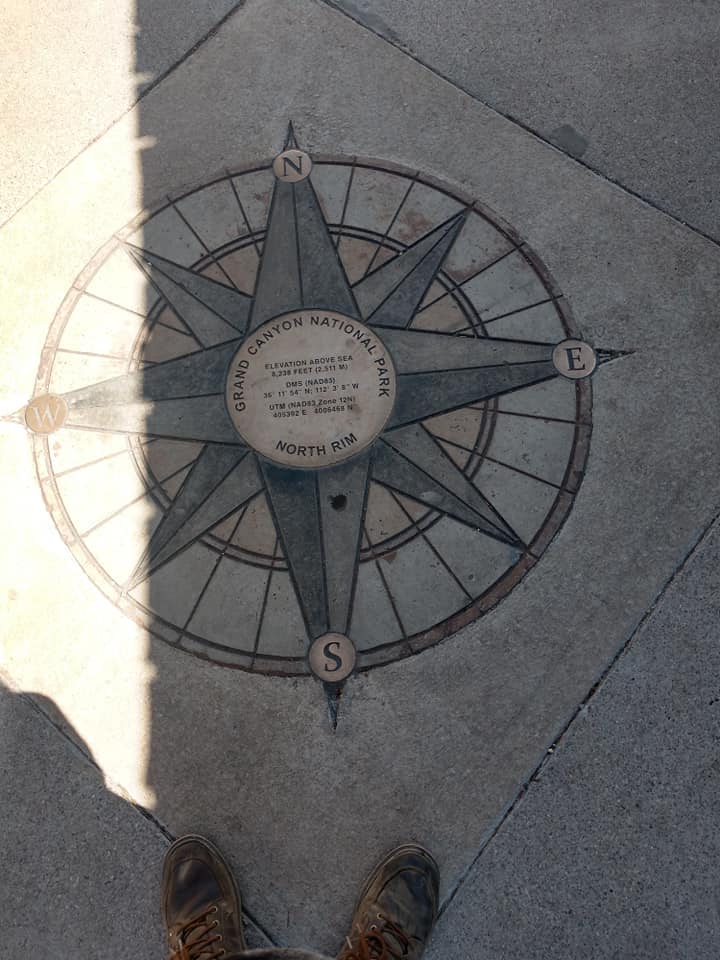
- Because the North Rim sits at around 8,000 feet in elevation, staying hydrated is essential. The higher elevation can make hiking and walking feel more strenuous, especially if you’re coming from lower elevations.
- Fill up your gas tank and grab snacks before entering the park. Many travelers stop in Jacob Lake before driving into the North Rim since services become more limited afterward.
- Download offline maps ahead of time. GPS and cell service may not work consistently once you’re inside the park.
- Try to experience both sunrise and sunset if your schedule allows. The lighting changes dramatically throughout the day, and sunrise at the North Rim is especially peaceful thanks to the lighter crowds.
- Wear comfortable walking shoes, even if you don’t plan on hiking. Some of the best viewpoints require short walks on uneven terrain.
- Bring layers, especially during spring and fall visits. Temperatures can shift quickly between early morning, afternoon, and evening.
Things to do at the Grand Canyon North Rim
While the Grand Canyon North Rim may be quieter than the South Rim, there’s still plenty to experience here. The difference is that the North Rim focuses less on attractions and crowds and more on scenic beauty, hiking, and slowing down enough to truly appreciate the canyon.
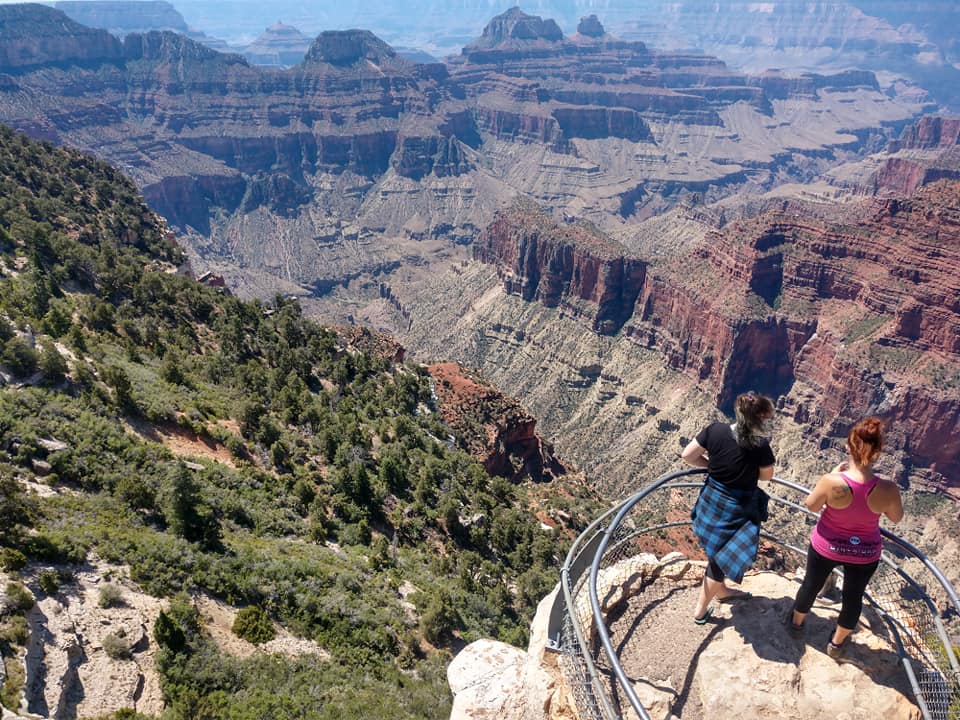
One of the most popular things to do is visit Bright Angel Point. This short, paved walk leads to one of the park’s most stunning panoramic views and is easily accessible to most visitors. It’s especially beautiful around sunrise and sunset when the canyon walls begin to glow with changing colors.
Many visitors also spend time at the historic Grand Canyon North Rim Lodge. Even if you’re not staying overnight, the lodge is worth visiting for its massive canyon-facing windows, cozy atmosphere, and outdoor patio views. Grabbing a cup of coffee and relaxing near the canyon edge is honestly one of the best experiences on the North Rim.
For travelers looking to explore further, hiking is one of the area’s biggest highlights. The North Kaibab Trail is one of the most famous trails in the park and offers breathtaking canyon views almost immediately after you start. Even hiking a short portion of the trail gives you a completely different perspective of the canyon.
Another favorite stop is Cape Royal, one of the easiest scenic viewpoints to access by car. The drive itself is beautiful, winding through forests and overlooks before opening up to sweeping canyon views. Cape Royal is especially popular at sunset thanks to its wide-open vantage point.
If you enjoy scenic drives, the North Rim offers several opportunities to slow down and take in the landscape. Wildlife sightings are common throughout the area, especially during early morning and evening hours. It’s not unusual to spot deer, bison, or wild turkeys while driving through the forests of the Kaibab Plateau.
One of the most memorable things to do at the Grand Canyon North Rim is stargazing. Because of its remote location and minimal light pollution, the night skies here are incredible. On clear nights, the stars feel unbelievably bright, especially compared to what most people are used to seeing back home.
Wrapping It All Up
The Grand Canyon North Rim may take a little more effort to reach, but that extra effort is exactly what makes it feel so special. The North Rim offers a quieter, slower experience that allows you to connect with the surrounding landscape.
Whether you spend your time hiking into the canyon, watching sunrise from Bright Angel Point, relaxing with a cup of coffee at the lodge (when it reopens), or enjoying the silence beneath the pine trees, the North Rim has a way of making you slow down and appreciate the moment you’re in.
It’s the kind of destination that is the ultimate goal: to remind you that travel doesn’t always have to be rushed or packed with constant activity. Sometimes the best trips are the ones where you leave space to breathe, explore at your own pace, and take in the beauty around you.
If you’re planning a Southwest road trip, the North Rim is worth adding to your itinerary. Between the cooler temperatures, scenic drives, and unforgettable canyon views, it’s one of the most peaceful national park experiences you can have in the United States.
